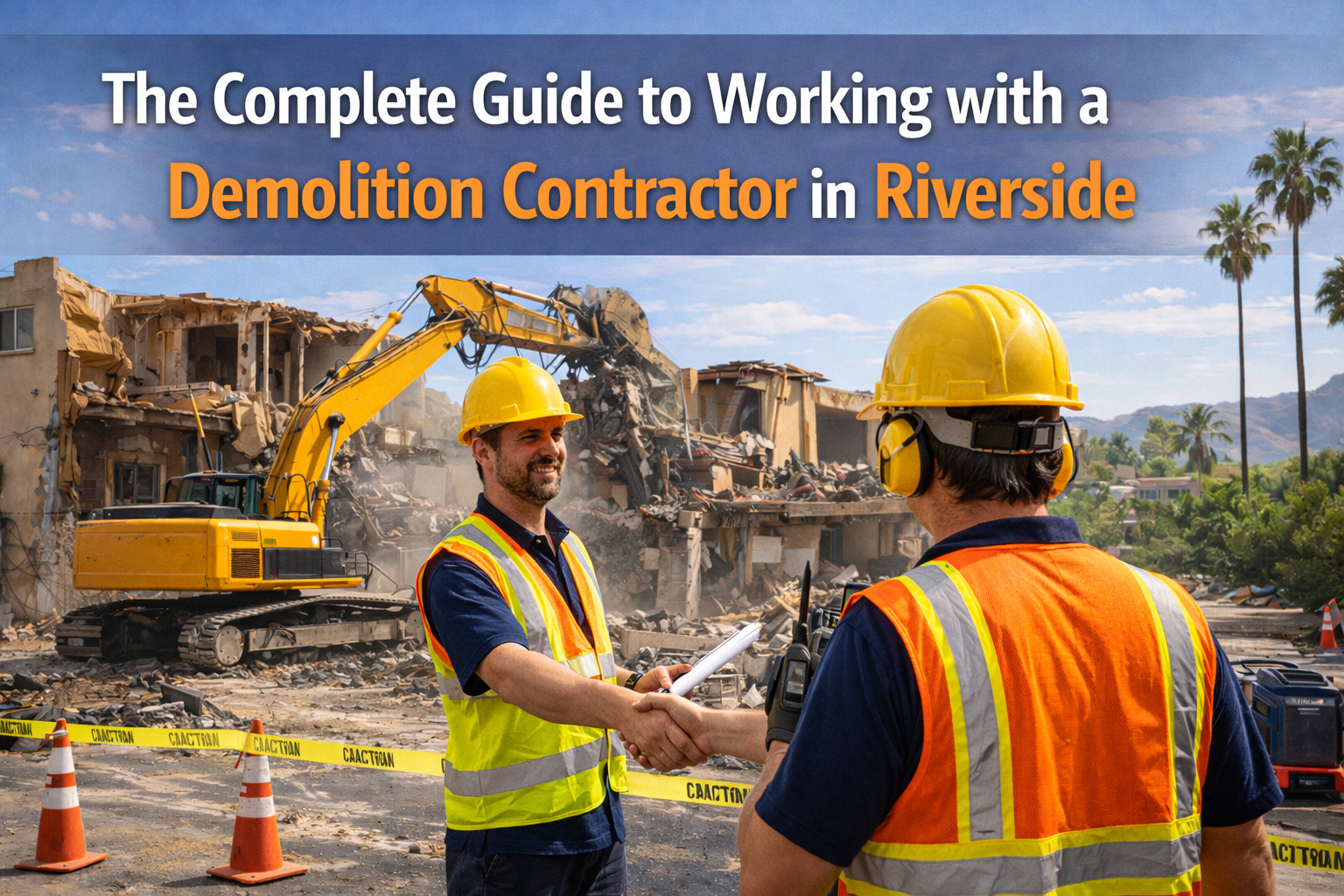
Demolition is one of the most physically demanding and technically complex segments of the construction industry. It is also one of the most consequential a poorly executed demolition can create safety hazards, legal liability, environmental problems, and costly delays for whatever project follows. For property owners in Riverside, California, working with a qualified Demolition Contractor Riverside makes the difference between a project that moves forward smoothly and one that runs into serious complications.
This guide covers what demolition contractors do, the different types of demolition common in Riverside, what the process looks like from start to finish, and the important regulatory considerations unique to the area.
The Scope of Demolition Services
A professional demolition contractor offers a broad spectrum of services that go well beyond simply knocking down walls. In Riverside, where the property landscape includes everything from post-war residential bungalows to large industrial complexes, demolition contractors handle a wide variety of project types:
Full Structure Demolition The complete removal of a residential home, commercial building, or industrial structure from a site. This is required when a structure is beyond repair, when a property is being redeveloped, or when a building has been condemned.
Interior Demolition Selective removal of interior elements walls, flooring, ceilings, fixtures, cabinetry while leaving the exterior shell of a building intact. Interior demolition is commonly associated with commercial fit-outs, home renovations, and adaptive reuse projects.
Concrete Demolition Removing concrete driveways, foundations, slabs, retaining walls, and other hardscape elements. Hydraulic breakers, concrete saws, and excavators with specialised attachments are used to break and remove concrete efficiently.
Swimming Pool Demolition Pool removal is a common service in Riverside, where residential pools are widespread. Options include partial removal (fill the pool with inert material) and full removal (excavate and remove the pool entirely), with implications for property valuation and future use of the space.
Garage and Outbuilding Demolition Detached garages, sheds, barns, and other outbuildings are often removed as part of property upgrades or to free up space for new construction.
Asbestos and Hazardous Material Abatement Many structures built before the 1980s in Riverside contain asbestos in insulation, floor tiles, roofing, or other components. Lead-based paint is also common in older buildings. These materials must be identified and safely removed by specialists before demolition proceeds, in compliance with federal and state regulations.
Before Demolition Begins: Planning and Permitting
Professional demolition in Riverside does not begin with machinery it begins with planning. A reputable Demolition Contractor in Riverside will conduct a pre-demolition survey of the property to identify structural features, utility connections, and any hazardous materials.
Utility Disconnection All utilities gas, electricity, water, and telecommunications must be disconnected before any demolition begins. This is a non-negotiable safety step. Contractors coordinate with the relevant utility companies to ensure that services are properly terminated.
Hazardous Material Assessment Older structures require testing for asbestos, lead paint, and other regulated substances. If found, these materials must be abated by licensed professionals before the demolition crew can proceed.
Permit Acquisition Demolition in Riverside requires permits from the appropriate authority either the City of Riverside or Riverside County Building and Safety, depending on the location. Permits specify the approved scope of work and ensure that the project is inspected and carried out in accordance with local codes.
Attempting to demolish a structure without the necessary permits can result in fines, mandatory restoration requirements, and complications when selling the property or obtaining future permits.
The Demolition Process
Once planning is complete and permits are secured, the demolition process follows a structured sequence:
Site Preparation The site is set up for safe demolition. This includes establishing perimeter barriers, setting up safety signage, and positioning equipment and debris removal containers.
Selective Removal Prior to mechanical demolition, salvageable materials may be removed. Windows, doors, appliances, copper wiring, structural timber, and other materials with reuse or recycling value are often stripped out before the main demolition begins.
Mechanical Demolition Depending on the structure and site, various methods may be used. Excavators with demolition attachments efficiently break down the structure and move debris. Larger structures may require the use of wrecking equipment with extended reach. The choice of method depends on the size of the structure, proximity to other buildings, and site access.
Debris Removal and Recycling Demolition generates significant volumes of debris. In Riverside County, the Construction and Demolition Waste Diversion Programme requires that a minimum of 65% of nonhazardous materials be diverted from landfill through recycling or reuse. Concrete, metal, clean wood, and other materials are separated and directed to appropriate recycling facilities.
Site Clearing and Grading Once all debris is removed, the site is graded to prepare it for whatever comes next new construction, landscaping, or other use. The contractor ensures the site is left in a condition appropriate for the next stage of the project.
Residential vs. Commercial Demolition in Riverside
While the fundamental process is similar, residential and commercial demolition differ in scale, complexity, and regulatory requirements.
Residential Demolition in Riverside tends to involve smaller structures, but may present challenges related to lot size, proximity to neighbouring properties, and the presence of mature landscaping or other features that require protection. Home demolition projects are also commonly driven by renovation rather than full teardown, requiring careful selective demolition to preserve what is being retained.
Commercial Demolition involves larger structures, often in more visible locations, and may require additional coordination with the City of Riverside for traffic management, neighbour notification, or structural concerns. Commercial buildings are also more likely to contain mechanical systems, elevators, fire suppression infrastructure, and other components that require specialised handling.
Environmental Responsibility in Demolition
Riverside’s commitment to environmental standards means that professional demolition contractors must operate within a robust regulatory framework. In addition to the C&D Waste Diversion Programme, contractors must manage dust and particulate matter, a significant concern given Riverside’s air quality challenges. Water runoff from demolition sites must be managed to prevent contamination of stormwater systems.
Contractors who are knowledgeable about these requirements and incorporate them into their standard practices ensure that demolition projects in Riverside are completed not only efficiently but responsibly.
Qualities to Expect from a Professional Demolition Contractor
When engaging a Demolition Contractor in Riverside for any size project, certain qualities define professional and reliable service:
Transparent Communication A professional contractor explains the full scope of the project clearly, provides a detailed written estimate, and communicates proactively throughout the work.
Proper Credentials A valid California contractor’s licence, liability insurance, and workers’ compensation coverage are the minimum credentials to confirm before any contract is signed.
Safety-First Approach Safety protocols on a demolition site protect workers, neighbours, and the surrounding environment. Contractors who prioritise safety have clear procedures in place for every phase of the work.
Experience in the Riverside Market Local experience means familiarity with Riverside’s permitting process, disposal facilities, soil conditions, and the specific challenges that different neighbourhoods and property types present.
Accountability for Waste Diversion Given Riverside County’s requirements, the contractor should have a documented plan for how demolition debris will be sorted, recycled, and disposed of in compliance with local regulations.
Demolition is not the end of a structure’s story it is the beginning of what comes next. A professional Demolition Contractor in Riverside approaches every project with the expertise, care, and accountability that ensures the transition from old to new is handled safely, legally, and responsibly.